So what’s the Difference?
There’s been a noticeable shift in the way people choose to travel. More and more, guests are searching for something quieter, more intentional, and more connected to nature. Along the way, terms like “ecohut”, “tiny home”, and “cabin” have become increasingly common.
They’re often used interchangeably, but in reality, they describe very different experiences.
So what’s the difference—and where do Kimo Estate’s ecohuts sit within it?
The Rise of Smaller, Smarter Stays
Traditional accommodation has long been centred around size and scale. Larger rooms, more facilities, and more infrastructure were once seen as the markers of quality. But that idea is shifting. Increasingly, travellers are placing more value on experience than excess.
Smaller spaces, when designed properly, offer something that larger ones often cannot. They create focus. They encourage you to slow down. They allow the surrounding landscape to become part of the stay, rather than something viewed from a distance.
This is where ecohuts, tiny homes, and cabins all come into the conversation—but they approach that idea in very different ways.
What Is a Tiny Home?
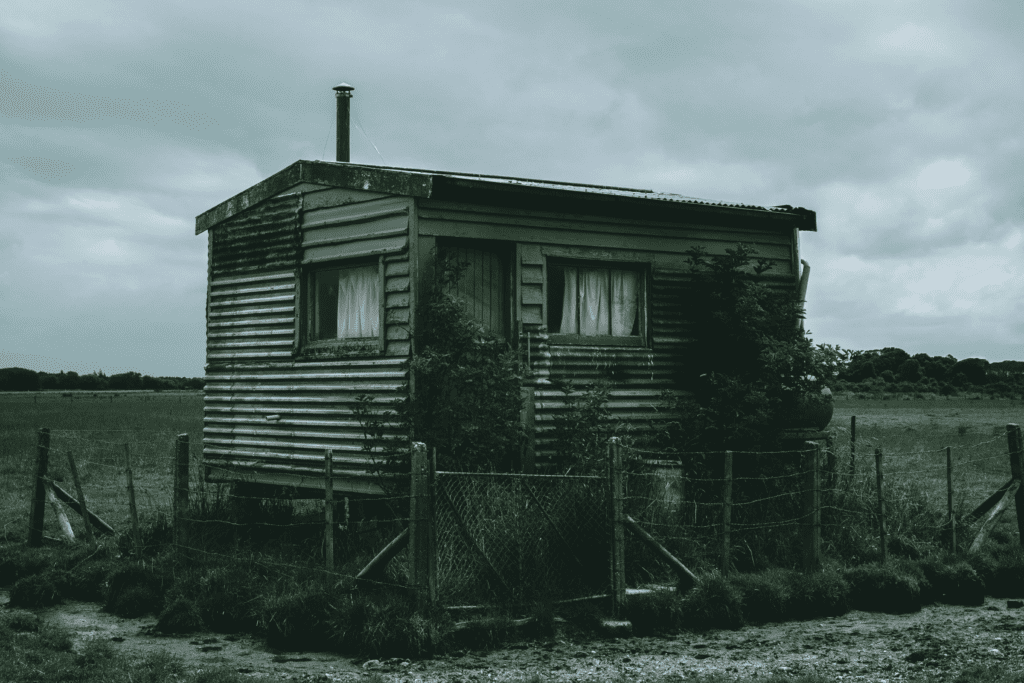
Tiny homes began as a movement centred around simplicity and affordability. They are typically compact, efficient structures designed to reduce living costs and minimise footprint. Many are built on trailers or designed to be transportable, which allows flexibility but can also introduce design limitations.
In the accommodation space, tiny homes have grown rapidly in popularity. You’ll find them in backyards, on rural properties, and listed widely across platforms like Airbnb. Some are well designed and thoughtfully positioned, but many prioritise function over experience.
The focus tends to be on size and efficiency rather than on the relationship between the building and its environment. In many cases, a tiny home is simply placed on a block of land rather than designed specifically for it.
What Defines a Cabin?
Cabins are perhaps the most familiar of the three. Traditionally, they are larger, more conventional structures built with permanence in mind. They often include multiple rooms, full kitchens, and a layout that feels closer to a standard house.
Cabins are generally comfortable and practical, making them well suited to families or longer stays. However, they are not typically designed around a specific experience or philosophy. Their focus is on accommodation first, rather than immersion or connection.
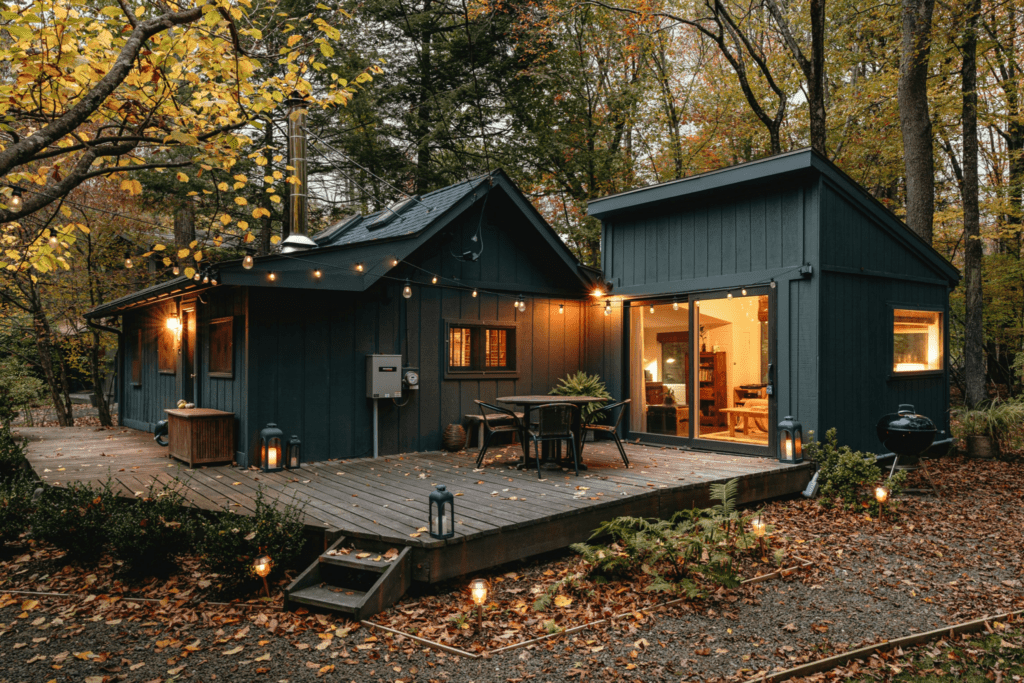
While many cabins are located in beautiful settings, the design itself does not always respond directly to the landscape. The building exists within the environment, rather than working in harmony with it.
What Makes an Ecohut Different?
An ecohut sits somewhere between these two concepts, but is defined less by size and more by intent.
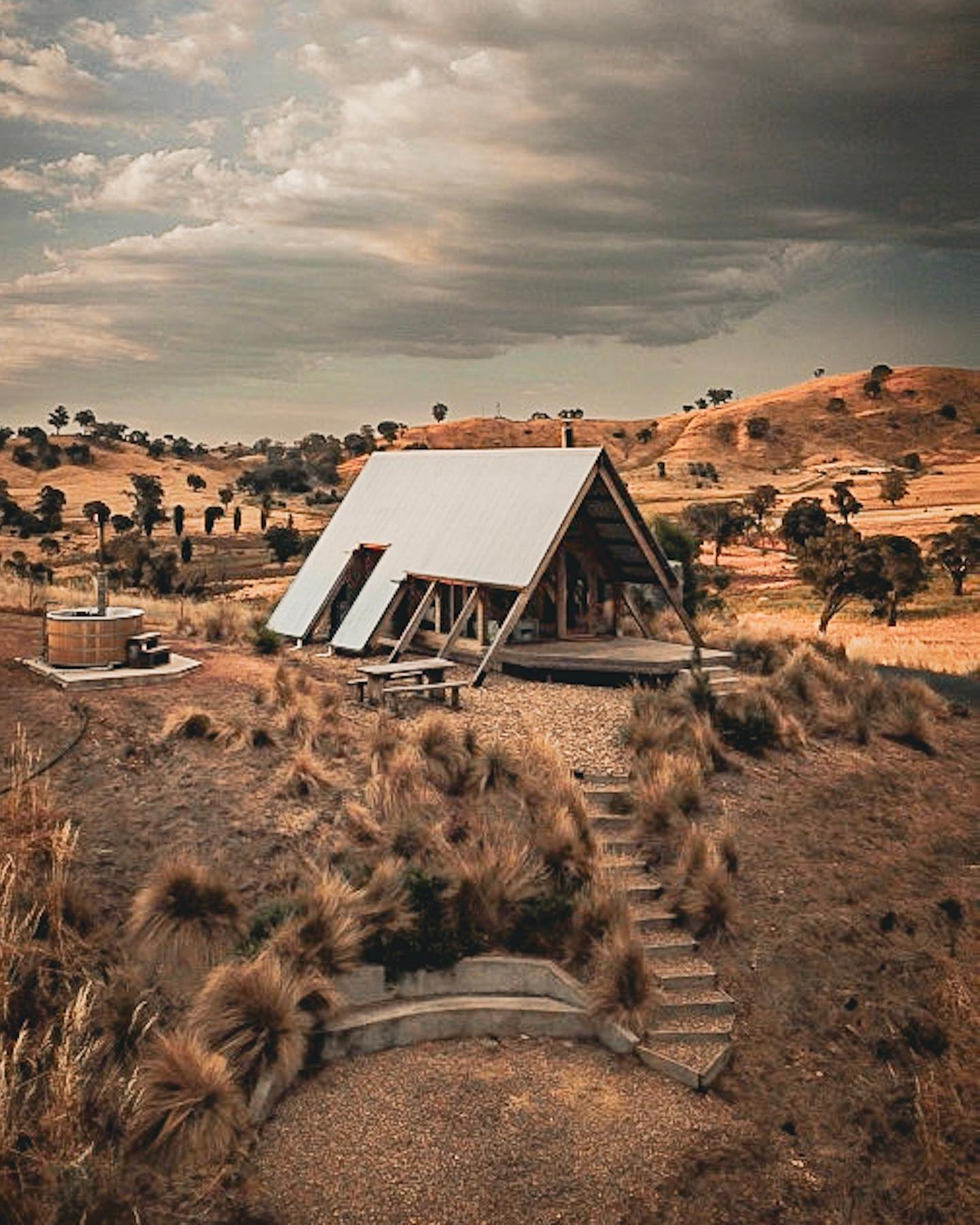
At Kimo Estate, the ecohuts were not designed to simply provide accommodation. They were designed to work with the land, to minimise environmental impact, and to maximise the guest experience through thoughtful architecture.
Each hut is carefully positioned on its own hilltop, oriented to capture light, views, and natural airflow. The structures are off-grid, powered by solar energy and supplied by rainwater, but without compromising on comfort. The design considers thermal performance, material selection, and long-term sustainability from the outset.

What separates an ecohut from a typical tiny home is this level of integration. It is not just about being small. It is about being deliberate.
What separates it from a cabin is restraint. Instead of adding more space, more rooms, or more features, the focus is on refining what is essential and removing what is not.
Design Versus Placement
One of the clearest distinctions between these types of accommodation comes down to whether they are designed for a location or simply placed within it.
Many tiny homes and cabins are adaptable structures that can be installed in various settings with minimal change. While this flexibility has advantages, it often means the design does not fully respond to the specific landscape.
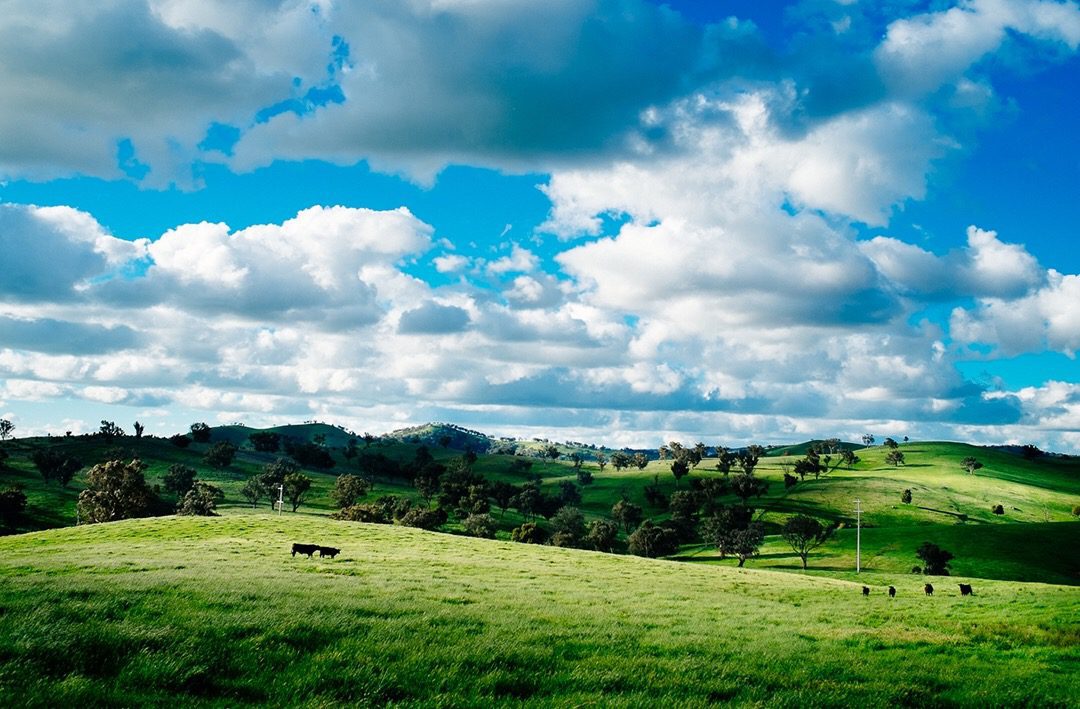
At Kimo Estate, each ecohut was designed with its exact location in mind. The slope of the land, the direction of the wind, the path of the sun, and the surrounding views all informed the final outcome. The result is a structure that feels connected to its environment rather than imposed upon it.

Experience Over Size
Another key difference lies in how the space is experienced.
Cabins often offer more room, but that additional space can sometimes disconnect you from your surroundings. Tiny homes offer efficiency, but can feel compact if not carefully designed.
Ecohuts take a different approach. By keeping the footprint small and the design intentional, they draw your attention outward. Large windows frame the landscape, outdoor spaces become extensions of the interior, and the experience is shaped as much by what is outside as what is inside.
It is less about how much space you have, and more about how that space makes you feel.
Ecohut: Sustainability That Is Built In
Sustainability is another area where these categories diverge.
While many tiny homes are marketed as environmentally friendly, not all operate independently or reduce impact in a meaningful way. Cabins, particularly older ones, are often connected to traditional infrastructure and can have a larger environmental footprint.
Ecohuts are designed from the ground up with sustainability in mind. At Kimo Estate, that means operating off-grid, using renewable energy, managing water responsibly, and integrating with a broader approach to land stewardship on the farm.
It is not an added feature. It is a fundamental part of how they function.

So, Which One Is Right?
The answer ultimately depends on what you are looking for.
If you are after a practical, familiar space for a longer stay or a family trip, a cabin may be the right fit. If you are drawn to compact living or a more affordable option, a tiny home can offer a simple and flexible solution.
But if you are looking for something that combines thoughtful design, environmental responsibility, privacy, and a deep connection to the landscape, an ecohut offers a different kind of experience altogether.
A Different Way to Stay: Kimo Ecohut
At Kimo Estate, our ecohuts were never about following a trend. They were built as a response to the land, the climate, and a belief that less can be more when it is done well.
They represent a shift away from traditional accommodation towards something more considered, more sustainable, and ultimately more memorable.
Not just a place to stay—but a way to experience where you are.